All posts
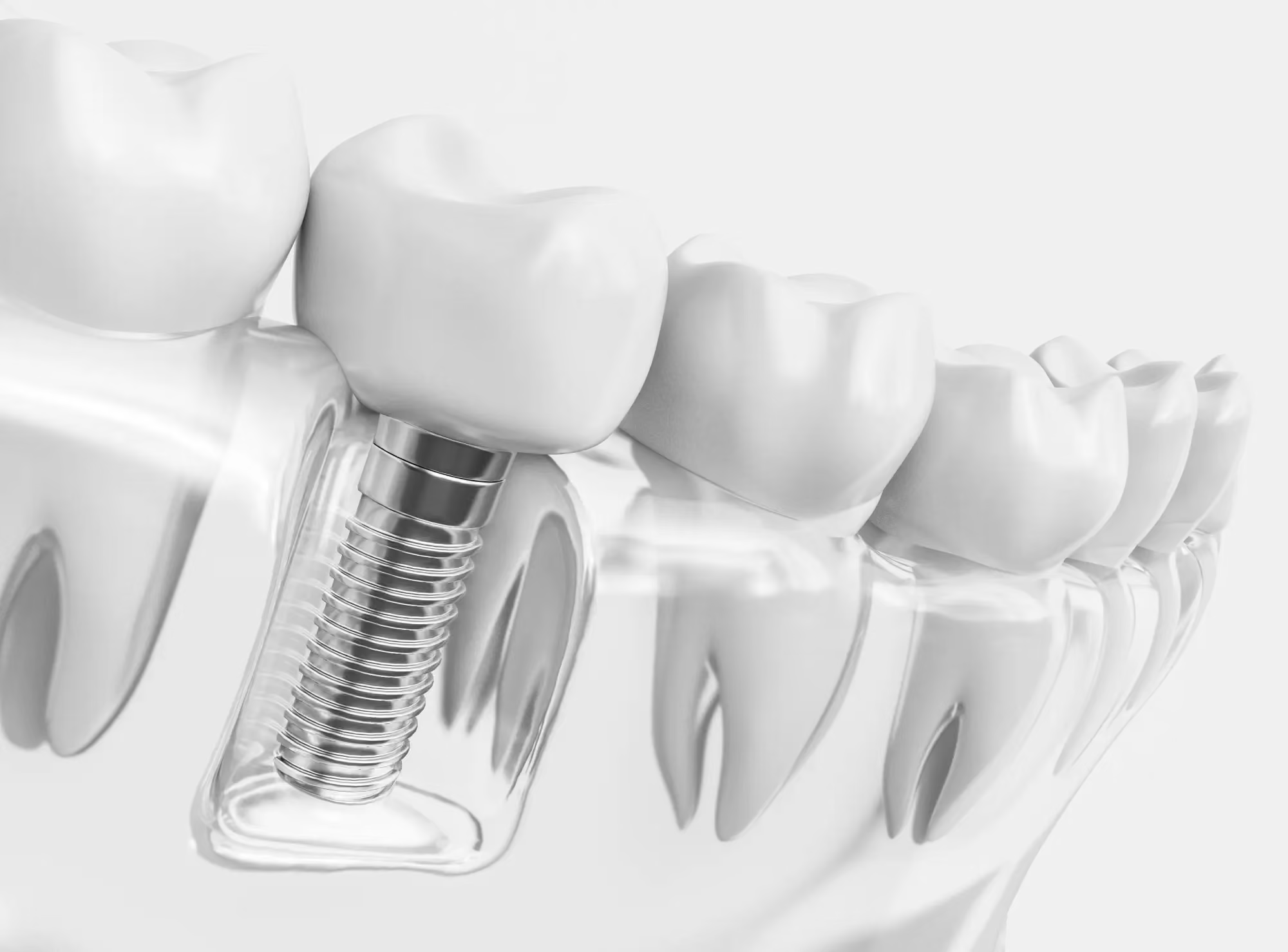
Every clinician remembers the first time they prepared for a complex surgical case. The jitters, the questions, the gravity of responsibility. In implant dentistry, precision isn’t optional. It’s essential. And confidence in surgical technique stems not just from textbook knowledge, but from true anatomical understanding.
That’s where cadaver-based training proves indispensable. It’s the missing link between theoretical learning and safe, successful clinical performance. Learning anatomy from models or two-dimensional charts may be useful, but it simply doesn't mimic the tactile, spatial challenges of performing surgery on a real patient.
And in dental surgery, where one millimeter can make the difference between success and devastating complications, that gap matters. When dental professionals invest in cadaver training, they elevate their skills, minimize patient risk, and align their practice with the highest standards of surgical safety.
Why Cadaver Training Matters More Than Ever
The rise in dental implant procedures has made surgical education more critical than ever. According to the American Academy of Implant Dentistry, over 500,000 implants are placed annually in the U.S., with that number expected to grow year-over-year. As this demand continues to climb, so does the expectation for providers to deliver predictable, complication-free results.
However, surgical safety begins far before scalpel meets tissue. It starts with a deep-rooted knowledge of human anatomy: understanding nerve courses, sinus boundaries, and vascular structures from a three-dimensional, hands-on perspective. Cadaver-based training is the gold standard for mastering these skills.
Top Benefits of Cadaver-Based Surgical Training
- Real-World Experience: Working on cadavers mimics real-life surgical conditions where anatomical variability is the norm, not the exception.
- Error-Prevention Training: Dentists learn how to avoid hitting vital structures, reduce intraoperative complications, and enhance outcomes through anatomical predictability.
- Enhanced Surgical Confidence: You can develop more familiarity with live tissue details, bone density, soft tissue behavior, which boosts procedural preparation and chairside assertiveness.
- Hands-On Muscle Memory: Performing drilling, flap design, and suturing in a tactile, true-to-life setting reinforces technique like no simulation can.
From Anatomy Knowledge to Surgical Mastery
It's one thing to learn about the mandibular nerve’s path. It's another to visualize and palpate its course, and quite another again to avoid it during third molar surgery or implant placement. Through direct cadaver experience, dentists move from passive learning to active anatomical fluency, transforming potential risks into confident decision-making.
At Implant Pathway, a nationally recognized leader in implant dentistry training founded by Dr. Justin D. Moody, anatomy isn’t just an academic checkbox. It's the foundation of surgical safety. Every course in our continuum is designed to build procedural confidence by grounding learners in the 'why' behind every incision, every drill path, and every placement protocol.
How Implant Pathway Integrates Cadaver Training
What sets our modules apart is how we integrate live patient implant training with cadaver dissection workshops. Whether you enroll in our Fast Track or Standard Track programs, anatomy is not an afterthought. It’s taught in context with immediate surgical application. Here’s how we structure our cadaver-based instruction for maximum impact:
- Guided Dissection Labs: Under close 2:1 mentor supervision, clinicians explore anatomical variability using fresh frozen cadavers for realism you can feel.
- Surgical Planning Exercises: Dentists use CBCT data alongside dissection to reinforce spatial mapping between radiographic findings and surgical anatomy.
- Complication Management Scenarios: We simulate high-risk zones including mental foramen regions and maxillary sinus areas to teach strategies that reduce avoidable harm.
Designed for Learners Who Want Practical Results
Implant Pathway attracts dental professionals across a wide range of experience levels, from new graduates daring to step into surgical roles to seasoned clinicians ready to master advanced techniques.
With cadaver training as a core component of our curriculum, learners walk away not just with CE credits, but true clinical readiness. We’ve designed our course offerings to meet professionals where they are:
- Flexibility through Custom Learning Paths: Choose our Fast Track format for an immersive, accelerated experience or opt for the Standard Track to balance learning with clinical responsibilities.
- Extensive Course Catalog: Beyond implants, dive into sedation, tissue grafting, sinus lifts, or guided surgery with over 20 expert-led training options.
- Supportive Tuition Options: We offer exclusive new graduate and military discounts, along with flexible financing to help you invest in your future without financial strain.
Answering Common Questions
- Is cadaver training only for beginners? No. While it's invaluable for entry-level clinicians, advanced implantologists and oral surgeons use cadaver practice to refine new techniques and reduce complication rates for complex cases.
- Is cadaver work uncomfortable? New learners may feel nervous initially, but the professional, respectful environment provided at Implant Pathway quickly transitions fear into curiosity, and eventually into confidence. It’s about learning anatomy through the lens of healing, not discomfort.
- How does this translate to better patient outcomes? Greater anatomical understanding means fewer surgical surprises, which translates into faster recovery, lower incidence of nerve disturbance or infection, and higher long-term implant success.
Ready to Transform Your Surgical Skills?
Seeing anatomy is one thing. Understanding it on a surgical level is transformational. Cadaver-based education isn’t optional. Rather, it’s an essential component for any clinician who is serious about building their implantology skills. Working on cadavers helps bridge the gap between what you know on paper and what you must do in the operatory, all before you have to perform surgery on a live patient for the first time.
Led by Dr. Justin D. Moody, Implant Pathway equips you to place dental implants with maximum safety, precision, and predictability. Our national training programs give you access to both cadavers and real patients.
So don’t wait. Make the leap toward full surgical confidence and patient-first care today. Call Implant Pathway at (888) 309-2423 to explore upcoming cadaver training courses or visit our website now to explore all of our implant dentistry training programs.